Faculty Spotlight
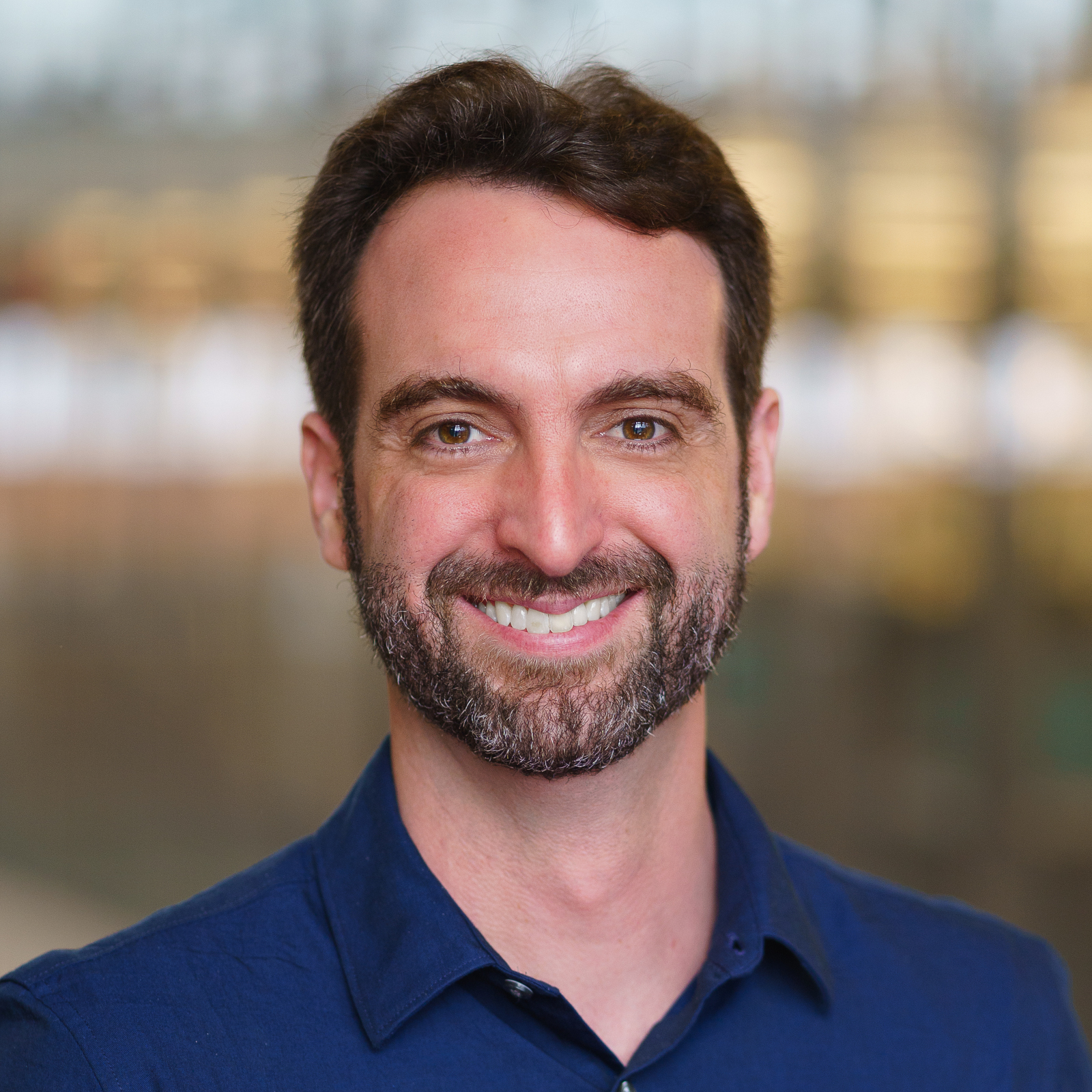
Dr. David M. Rosen, Assistant Professor
How does a robot know where it is? For a self-driving car on city streets, a drone surveying a disaster zone, or an underwater vehicle mapping the ocean floor, the answer is anything but straightforward. These machines rely on sensors that are noisy, incomplete, and sometimes contradictory — and when the algorithms interpreting that data make mistakes, the consequences can be severe. This fundamental challenge drives the research of David M. Rosen, assistant professor with joint appointments in Electrical & Computer Engineering and Mathematics, with a courtesy appointment in the Khoury College of Computer Sciences.
Rosen directs the NEU Robust Autonomy Laboratory (NEURAL), where his team develops algorithms for robotic perception that don’t just work most of the time, but come with mathematical proof that their answers are correct. Since joining Northeastern in 2021, after postdoctoral research at MIT and industry experience at Oculus Research (now Meta Reality Labs), Rosen has established a research program reshaping how the robotics community thinks about trust in autonomous systems.
Research Foundations: When “Pretty Good” Isn’t Good Enough
GPS signals don’t reach underwater, struggle indoors, and can be jammed. For robots in these environments, figuring out “where am I?” becomes a formidable mathematical puzzle known as Simultaneous Localization and Mapping (SLAM) — the process of building a map of an unknown environment while tracking one’s own position within it. Standard SLAM algorithms are fast, but they have a critical flaw: they can get stuck on wrong answers with no way of knowing they’ve made a mistake.
Rosen’s doctoral research at MIT tackled this head-on. His breakthrough algorithm, SE-Sync, was the first practical method provably capable of recovering correct SLAM solutions. The key insight was using convex relaxation — transforming a hard problem with many misleading dead ends into a smoother one whose solution can be verified as globally optimal. SE-Sync addressed a longstanding challenge about the fundamental reliability of robotic navigation, earning the inaugural Best Paper Award at the International Workshop on the Algorithmic Foundations of Robotics (2016).
Making Underwater Robots Affordable

At Northeastern, Rosen’s team extended these ideas to the ocean. Working with postdoctoral researcher Alan Papalia and professor Hanumant Singh, they developed an algorithm for range-aided SLAM using acoustic sensors — the underwater equivalent of sonar pings. These sensors are far cheaper than traditional navigation systems but also far less precise, telling a robot only how far away it is from a reference point, not which direction. Rosen and Papalia’s algorithm, CORA, uses convex relaxation to recover correct solutions even from random initial estimates, substantially reducing hardware cost requirements.
This work earned the 2025 IEEE Transactions on Robotics King-Sun Fu Memorial Best Paper Award — the field’s most prestigious annual paper prize. Rosen’s lab also earned an Honorable Mention for the same award in 2021 for their pioneering work on distributed multi-robot SLAM, and a Best Student Paper Award at Robotics: Science and Systems (2020). In 2019, he was named an RSS Pioneer, recognizing the top early-career researchers in robotics worldwide.
Expanding the Frontier
Rosen’s current research extends from multi-robot teams to broader problems in trustworthy AI. His lab is developing methods for robots to collaboratively build maps without centralizing their data — critical for operations where communication is limited. This work is supported by grants from the Charles Stark Draper Laboratory and MIT Lincoln Laboratory, and Rosen contributes to a $13M U.S. Army Research Laboratory program led by the Kostas Research Institute.
His PhD students are pushing these ideas further: Owen Howell is applying harmonic analysis to robust 3D reconstruction, Liam Pavlovic is building uncertainty models for safer robotic decision-making, and Hanna Zhang is verifying the reliability of neural network controllers. Both Howell and Pavlovic hold NSF Graduate Research Fellowships. Lab alumni have gone on to the Boston Dynamics AI Institute, MIT Lincoln Laboratory, and faculty positions at McMaster University.
Looking Ahead
As robots move into oceans, hospitals, and disaster zones, unreliable perception carries real stakes. By developing algorithms that are not just fast but provably correct, Rosen is building the mathematical infrastructure that makes trustworthy autonomy possible. Through his research, mentorship, and open-source software tools used across academia and industry, David Rosen exemplifies Northeastern’s mission of combining rigorous scholarships with real-world impact.